
Table of Contents:
- Introduction to Horse Jumping
- The Fundamental Gear for Novice Jumpers
- Techniques to Enhance Jumping Skills
- Avoiding Common Mistakes in Horse Jumping
- The Role of Strategy and Planning
- Tips from Expert Riders
- Understanding Horse Psychology
- Future Trends in Horse Jumping
Introduction to Horse Jumping
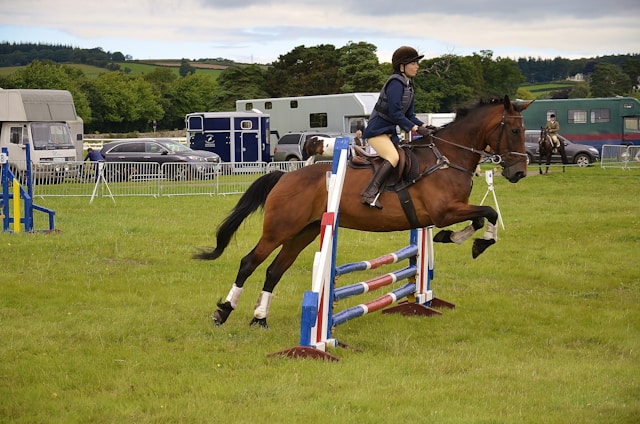
Horse jumping, often symbolized as the apex of equestrian sports, requires many skills ranging from precise coordination to strategic planning. Stemmed from necessity rather than sport, horse jumping’s origins lie in the historical fox hunts across the English countryside, where riders and horses navigated natural obstacles with aplomb. As it advanced into a competitive domain, the sport now boasts intricate courses with diverse jumps that challenge horse and rider to reach harmonious synergy.
Equipment is irreplaceable in this endeavor, particularly horse jump cups, which secure the jump bars at various heights. Understanding the significance of these cups illuminates why even minor details in equipment can influence the broader strokes of a successful jump. Whether adjusting the height for training or competition, a grasp on these basics allows novices to focus on fine-tuning their riding skills without equipment concerns.
The Fundamental Gear for Novice Jumpers
For those stepping into the arena of horse jumping, the right gear can make a dramatic difference. A properly fitted helmet is necessary to safeguard the rider against potential mishaps. Coupled with a well-chosen saddle, this ensures a balanced ride, enabling effective communication between the rider and horse. High-quality riding boots provide essential grip and support, which are critical during jumps when every bit of stability counts.
This initial investment in gear sets a foundation for success, ensuring safety and performance. With the right tools, riders can train more confidently and focus on mastering the techniques defining elite jumpers.
Techniques to Enhance Jumping Skills
Horse jumping is as much about technique as it is about synchronicity with the horse. Balance remains paramount, with riders needing to stay centered during jumps to properly guide the horse over obstacles. Fine-tuning body alignment and controlling the reins efficiently helps communicate subtle commands to the horse, which can prove decisive during competitive jumps.
A strategic approach often involves using exercise grids—pre-arranged patterns of poles or cavaletti—to help hone timing and rhythm. These exercises build a rider’s ability to anticipate and respond dynamically to the horse’s movements and the challenges posed by different courses.
Avoiding Common Mistakes in Horse Jumping
Even the most seasoned riders face obstinate challenges in the quest for perfection. Common mistakes include miscalculating the distance between jumps, inconsistent pacing that disrupts focus, and neglecting the nuances of horse communication. Unlike typical riding, jumps require the rider to develop a rhythmic rapport with the horse, including avoiding sudden movements that may unsettle the horse.
Warm-up routines are indispensable but easily overlooked. They set the stage for performance by acclimating the horse and rider to the day’s conditions. Awareness of these potential pitfalls is crucial for refining techniques and maintaining mental and physical readiness.
The Role of Strategy and Planning
Riding adeptly extends beyond mere execution; seasoned riders recognize the necessity of strategy. Each course brings forth its own set of configurations, compelling riders to adapt with intelligent planning. Developing a mnemonic or visual cue system can aid in memorizing jump sequences and critical turn points.
Insightful observations from competitive spheres unveil the emphasis on structured yet flexible planning. This foresight is the hallmark of champions, empowering riders to troubleshoot anticipated and unanticipated challenges effectively.
Tips from Expert Riders
Veteran riders illuminate the path forward for those eager to excel in horse jumping. Their shared experiences emphasize the virtue of patience—understanding that mastery is a progressive journey. With a call to innovation, experts encourage exploring new training regimes that blend traditional methods with contemporary insights.
Listening to professional guidance can demystify complex aspects of jumping. It offers nuanced advice from years of experience that addresses everything from mental preparedness to specific tack recommendations.
Understanding Horse Psychology
The nuanced dance of horse jumping extends to understanding equine psychology. Horses are creatures of instinct, and their ability to perform is anchored in trust placed in the rider. Recognizing subtle cues such as ear position, breathing patterns, and body tension enables riders to tailor their approach, fostering a balanced emotional and physical environment.
This mutual understanding enhances performance and enriches the bond between rider and horse, allowing consistent improvement and mutual respect.
Future Trends in Horse Jumping
While rich in tradition, horse jumping continues to reach for innovation. Emerging technologies like wearable sensors offer unprecedented insights into a horse’s biometrics, fundamentally altering training approaches. These advances enable customized training regimens, enhancing efficiency while supporting horse welfare.
The future promises a confluence of technology and sport poised to elevate horse jumping’s status further and ensure a safer, more dynamic experience for both horse and rider.